Animal Services in Jefferson County
Add’l Research by Aubrie Kavanaugh
Updated Sept. 19, 2026
We welcome your updates, additions, corrections, or comments: please email us. Information can be credited to you or kept anonymous, as you prefer.
Animal Control in Jeffco
Alabama requires local governments to pick up and impound loose dogs. Animal Control Officers (ACOs) also respond to reports related to dogs and cats.
Jeffco and many of its municipalities contract with Greater Birmingham Humane Society Animal Care & Control, LLC (GBHS ACC) for the fulfillment of this public safety protection. “We have four ACOs including the field services supervisor,” ACC Dispatch Manager Kristin Pierson told us. “At full staff, we have six ACO.”
GBHS ACCDirectors Gynger Jarboe & Kristin Pierson
205-591-6522
Serving unincorporated areas
and some municipalities.
Although ACOs may investigate cruelty or address municipal code violations, most Alabama ACOs are civilians who do not have law enforcement authority. The sheriff’s office and local PDs are responsible for the enforcement of cruelty laws.
Jeffco Animal Services At-a-Glance
Report animal concerns or violations according to the location, as noted below. For more information about animal control and enforcement of animal laws, or if your concern is not being addressed, see this guidance.
| Pop. | 2025 Cost | Jurisdiction | Pound | ACO | RAL |
|---|---|---|---|---|---|
| 674,721 | $947,028 | Jefferson Co. | County | GBHS | § 3-7A |
| Report animal concerns in unincorporated Jeffco — including the communities of Adger, Alton, Bayview, Bagley, Chalkville, Coalburg, Concord, Corner, Crumley Chapel, Docena, Dolomite, Edgewater, Flat Top, Forestdale, Grayson Valley, Hopewell, Kimbrell, McCalla, McDonald Chapel, Minor, Mount Olive, New Castle, Palmerdale, Robbins Crossroads, Rock Creek, Sayre, Shannon, and Watson — to GBHS ACC at 205-591-6522. | |||||
| 4,366 | $12,898 | Adamsville | County | PD | § 3-7A |
| Report animal concerns in Adamsville to the PD at 205-674-5671. The Cost figure is only what was paid to GBHS ACC for sheltering; the City also funds Animal Control. | |||||
| 4,368 | ? | Argo | County | GBHS | § 3-7A |
| Report animal concerns in Argo to GBHS ACC at 205-591-6522. | |||||
| 25,080 | $84,478 | Bessemer | County | City | § 14-58 |
| Report animal concerns in Bessemer to 205-424-4084. “Each day, two dedicated women, Belinda Pruitt and Rachel May, work tirelessly to provide a safe haven for our community,” Councilman Chester W. Porter wrote. Bessemer’s animal code is enforced by a BPD ACO, per Chief Gary Carmichael on WBRC. Bessemer requires dog licensing (§ 14-51). The Cost figure is only what was paid to GBHS ACC for sheltering; the City also funds Animal Control. | |||||
| 196,350 | $463,898 | Birmingham | County | City | § 6-1-14 |
| Report animal concerns in Birmingham to 311 or 205-254-2489. ACOs work directly for the city under the leadership of Animal Control Supervisor Shellie Kurtz. Hold time for animals impounded under city code is three days (§ 6-18). The Cost figure is only what was paid to GBHS ACC for sheltering; the City also funds Animal Control. | |||||
| 2,340 | $9,861 | Brighton | County | GBHS | § 3-7A |
| Report animal concerns in Brighton to GBHS ACC at 205-591-6522. | |||||
| 1,250 | $3,034 | Brookside | County | GBHS | § 3-7A |
| Report animal concerns in Brookside to GBHS ACC at 205-591-6522. | |||||
| 52 | $845 | Cardiff | County | GBHS | § 3-7A |
| Report animal concerns in Cardiff to GBHS ACC at 205-591-6522. | |||||
| 16,410 | ? | Center Point | County | GBHS | § 5-1 |
| Report animal concerns in Center Point to City Hall at 205-854-4460, or to GBHS ACC. | |||||
| 10,300 | ? | Clay | County | GBHS | § 3-7A |
| Report animal concerns in Clay to GBHS ACC at 205-591-6522. | |||||
| 310 | $296 | County Line | County | GBHS | § 3-7A |
| Report animal concerns in County Line to GBHS ACC at 205-591-6522. | |||||
| 10,000 | ? | Fairfield | County | GBHS | § 3-7A |
| Report animal concerns in Fairfield to GBHS ACC at 205-591-6522. | |||||
| 8,975 | ? | Fultondale | County | GBHS | #519 |
| Report animal concerns in Fultondale to GBHS ACC at 205-591-6522. | |||||
| 20,140 | ? | Gardendale | County | PD | § 8-44 |
| Report animal concerns in Gardendale to 205-631-8787 or report a stray dog. The Cost figure is only what was paid to GBHS ACC for sheltering; the City also funds Animal Control. | |||||
| 1,950 | $4,261 | Graysville | County | GBHS | § 3-7A |
| Report animal concerns in Graysville to GBHS ACC at 205-591-6522. | |||||
| 26,415 | ~$26,000 | Homewood | Vulcan Park | PD | § 4-4 |
| Report animal concerns in Homewood to the PD at 205-332-6200. ($26k is the most recently reported animal control annual expenditure.) The Cost figure is only what was paid to GBHS ACC for sheltering; the City also funds Animal Control. | |||||
| 16,775 | $29,425 | Hueytown | County | City | § 10-21 |
| Report animal concerns in Hueytown to 205-491-7010. The Cost figure is only what was paid to GBHS ACC for sheltering; the City also funds Animal Control. | |||||
| 13,500 | ? | Irondale | County | GBHS | § 3-52 |
| Report animal concerns in Irondale to GBHS ACC at 205-591-6522. See Irondale’s contracts with GBHS ACC from 2022, 2023, 2025. Irondale prohibits fixed-point tethering or chaining and also bans pit bull-type dogs by ordinance. | |||||
| 3,840 | $1,885 | Kimberly | County | GBHS | § 3-7A |
| Report animal concerns in Kimberly to GBHS ACC at 205-591-6522. | |||||
| 12,325 | ? | Leeds | PD | PD | § 8-53 |
| Report animal concerns in Leeds to the PD at 205-699-2581. | |||||
| 2,086 | $6,209 | Lipscomb | County | GBHS | § 3-7A |
| Report animal concerns in Lipscomb to GBHS ACC at 205-591-6522. | |||||
| 316 | $446 | Maytown | County | GBHS | § 3-7A |
| Report animal concerns in Maytown to GBHS ACC at 205-591-6522. | |||||
| 5,210 | ? | Midfield | County | GBHS | § 10-42 |
| Report animal concerns in Midfield to GBHS ACC at 205-591-6522. (See the Resolution to Contract with GBHS.) | |||||
| 2,260 | $2,225 | Morris | County | GBHS | § 3-7A |
| Report animal concerns in Morris to GBHS ACC at 205-591-6522. | |||||
| 22,460 | ? | Mountain Brook | PD | PD | § 6-107 |
| Report animal concerns in Mountain Brook to MBPD at 205-802-3844. | |||||
| 784 | $3,410 | Mulga | County | GBHS | § 3-7A |
| Report animal concerns in Mulga to GBHS ACC at 205-591-6522. | |||||
| 127 | $0 | North Johns | County | GBHS | § 3-7A |
| Report animal concerns in North Johns to GBHS ACC at 205-591-6522. | |||||
| 7,215 | ? | Pinson | County | GBHS | § 3-7A |
| Report animal concerns in Pinson to GBHS ACC at 205-591-6522. | |||||
| 9,544 | ? | Pleasant Grove | County | GBHS | § 18-45 |
| Report animal concerns in Pleasant Grove to Code Enforcement at 205-744-1735. | |||||
| 1,650 | $684 | Sylvan Springs | County | GBHS | § 3-7A |
| Report animal concerns in Sylvan Springs to GBHS ACC at 205-591-6522. | |||||
| 6,124 | ? | Tarrant | County | GBHS | § 3-4 |
| Report animal concerns in Tarrant to the PD at 205-849-2811. | |||||
| 613 | $700 | Trafford | County | PD | No. 85 |
| Report animal concerns in Trafford to Trafford PD at 205-647-9990. The Cost figure is only what was paid to GBHS ACC for sheltering; the City also funds Animal Control. | |||||
| 26,123 | ? | Trussville | County | GBHS | § 10-53 |
| Report animal concerns in Trussville to GBHS ACC at 205-591-6522. Trussville has contracted with GBHS since 2017. (Partly in St. Clair County.) | |||||
| 38,306 | ? | Vestavia Hills | Shelby | PD | § 4-19 |
| Report animal concerns in Vestavia to the PD at 205-823-1153. | |||||
| 3,224 | $6,018 | Warrior | County | GBHS | § 3-7A |
| Report animal concerns in Warrior to GBHS ACC at 205-591-6522. | |||||
| 417 | $1,627 | West Jefferson | County | GBHS | § 3-7A |
| Report animal concerns in West Jefferson to GBHS ACC at 205-591-6522. | |||||
Helena or Hoover: See Shelby Co.
Sumiton: See Walker Co.
Lake View: See Tuscaloosa Co.
[Add’l Notes: Argo is partly in St. Clair Co. Birmingham and Vestavia are partly in Shelby Co. County Line and Warrior are partly in Blount Co.Leeds is partly in Shelby & St. Clair counties.]
Is Dog Confinement Required in Jeffco?
Requirements vary by location, as indicated in the right column above. See Dog Confinement Laws in Alabama for more info.
- Rabies tag required: Off-premises dogs must be picked up and impounded if they are not wearing a current rabies tag, per the statewide public safety protections in the Rabies Chapter of Alabama law (§ 3-7A).
- Dog confinement required: Some cities and counties require owners to keep dogs on their own premises. Residents who allow dogs to roam may be charged with a violation.
How to get help:
- Report a loose dog by following the instructions in the table.
- If you choose to assist a lost, stray, or abandoned pet, be aware of your rights and responsibilities.
- If your pet is lost, see these tips.
Impoundment Facilities & Shelters
Government & Charity Facilities
- Woodlawn is Jeffco’s longtime impoundment facility.
- Impoundment is currently transitioning to Jefferson Co. Animal Care & Control Facility off Lakeshore Pkwy.
- A few municipalities utilize other impoundment facilities. Several public charity shelters also operate in Jefferson Co.
Commonly known as Woodlawn, Jefferson County’s animal impoundment facility has for decades served as the animal pound for the unincorporated area, the City of Birmingham, and many other Jeffco cities and towns.
WoodlawnBirmingham–Jefferson Co. Animal Control Shelter
6227 5th Ave North, Birmingham, AL 35212
(Open only for reclaims & drop-offs.)
205-591-6522
Management Contractor: At this time, Jefferson County outsources impoundment facility management to Greater Birmingham Humane Society Animal Care & Control, LLC. In mid-January 2015, GBHS ACC incorporated as a wholly-owned subsidiary of GBHS and signed its first government contract.
Performance: Prior to GBHS ACC’s management, Woodlawn was operated by Birmingham-Jefferson County Animal Control (BJCAC) as the impoundment facility and adoption center for animals picked up in Jefferson County or surrendered by their Jeffco owners. Now, GBHS reports that about 40% of their “Total Served” is brought in from other areas and/or belong to third-party owners.

Compensation: GBHS ACC collected $1,579,228 in 2025 taxpayer dollars for impoundment facility management in unincorporated Jefferson County and 19 of its towns and cities plus loose animal pickup in Birmingham and 14 other mostly small towns. The compensation paid to GBHS ACC by an additional 12 municipalities is unknown to us at this time.
GBHS Animal Census Reports
| GBHS CENSUS | 2024 | 2025 | YTD’26 |
|---|---|---|---|
| Total Intake | 17,161 | 20,237 | 10,784 |
| Stray Intake | 14,739 | 16.455 | 8,550 |
| Owner Surrender | 2,083 | 2,879 | 1,815 |
| Other Intake | 264 | 903 | 419 |
| Total Outcomes | 14,616 | 16,550 | 8,393 |
| Live Outcomes | 7,333 | 9,219 | 4,704 |
| Adoptions | 4,086 | 4,814 | 2,573 |
| Reclaim by Owner | 1,027 | 1,426 | 736 |
| Rescue | 198 | 2,979 | 1,395 |
| Fatal Outcomes | 7,283 | 7,331 | 3,689 |
| Euthanasia | 7,007 | 7,066 | 3,566 |
| Died/Lost | 276 | 265 | 123 |
| Missing Outcomes | 2,545 | 3,687 | 2,391 |
| Adj. Total Outcomes | 17,161 | 20,237 | 10,784 |
| Live Release Rate | 42.7% | 45.6% | 43.6% |
Source: GBHS Animal Census Reports for 2024, 2025, 2026.
YTD’26 = January through June. (As of Sept. 19, GBHS has not published a July report.)
Live Release Rate (LRR) = Live Outcomes ÷ Total Outcomes.
A substantial difference between Intake and Outcome totals suggests flawed or missing data and is indicated in Missing Outcomes, Adj. Total Outcomes, and in the LRR — pending accounting from the shelter.
Fatal Outcomes: GBHS ACC Animal Census Reports and spreadsheets demonstrate and confidential sources confirm that more than half of Surrendered and Unredeemed animals are immediately euthanized by GBHS ACC, without ever being made available. (State and local Stray Holds require that Strays be held for a 3–7-day redemption period; there is no Hold requirement for animals reliquished by their owners.)
Live Outcomes: Legal ownership of remaining animals is then Transferred from Jefferson County to third-party nonprofit rescue organizations and public charity shelters. Although GBHS ACC Animal Census Reports state a large number of Adoptions, GBHS ACC carries out no adoptions at Woodlawn. (Adoptions from Snow Drive constitute Snow Drive Animal Census data, and are not Jefferson County Animal Census data.)
Replacing the ‘Dilapidated’ Woodlawn
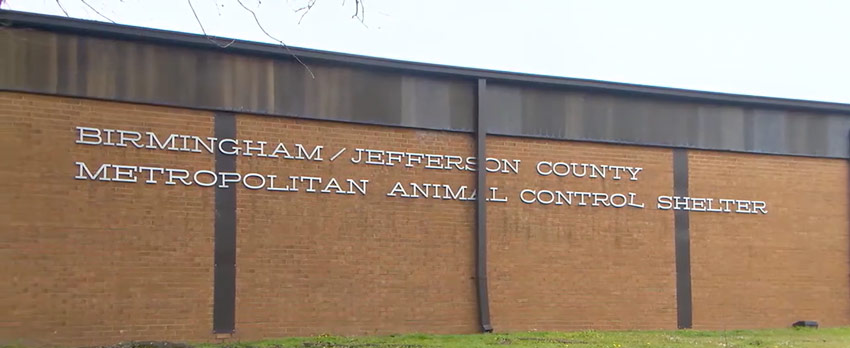
The Woodlawn impoundment facility, built over 50 years ago during the tenure of Mayor George G. Seibels, Jr., has seen better days:
- Woodlawn was “in a run-down and dilapidated condition” when GBHS ACC began managing the facility in 2015, Donald Watkins reported, while AL.com characterized Woodlawn as “unsafe” for the animals held there.
- GBHS CEO Allison Black Cornellius described the facility to AL.com’s Ivana Hrynkiw as unremediable. Cornelius equated repair to “putting lipstick on a pig,” stating, “We have got to get out of here... This is unacceptable.”
- “The problem we have now is that the animals that we take in are taken to Woodlawn. That facility is in poor condition, is remote, and woefully outdated,” Commissioner Joe Knight explained upon the 2024 construction announcement.
However, as AL.com’s Ivana Hrynkiw reported in 2015, Jefferson County was recovering from bankruptcy. Funds for a new impoundment facility were simply not available.
[Sources for Woodlawn construction date: Cornelius on Alabama’s 42 News, City of Birmingham.]
Creating ‘a Taj Mahal for Our Animals’
Six years later, though, the county purchased a 6.5-acre lot for $1.4M, and in November 2024 broke ground on the new Jefferson County Animal Care & Control. Construction was substantially completed in October 2025, multiple sources have informed us. BhamNow mentioned a December 2025 grand opening. Project manager BL Harbert posted photos in January 2026.
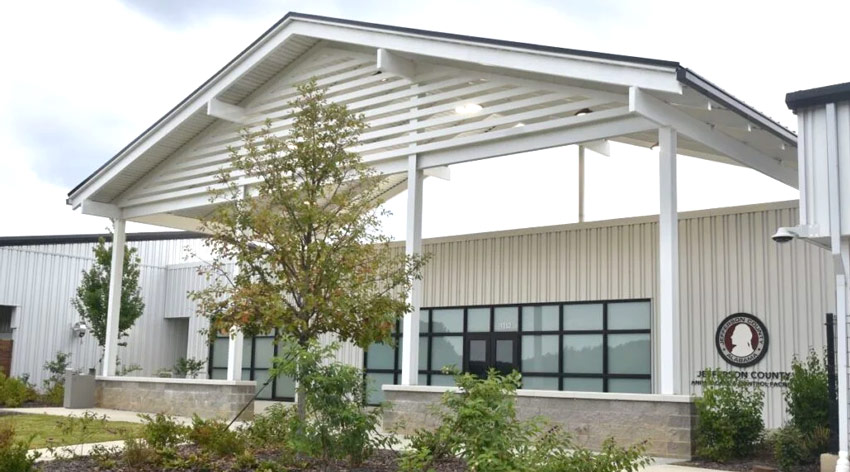
1052 Sydney Drive, Birmingham, AL 35211
(Soon to be in operation.)
The new 38,000 sq.ft. Jefferson County Animal Care & Control, described by Commissioner Sheila Tyson as “a Taj Mahal for our animals,” is located on a 6.5-acre site adjacent to Red Mountain Park and features:
- Increased & updated animal housing: A 50% increase in dog capacity (for 448 dogs, compared to 300 at Woodlawn) with “much larger” double-sided kennels offering dogs access to sunshine and fresh air. A 25% increase in cat capacity (over 100 cats, compared to about 80 at Woodlawn). Dedicated puppy and kitten areas.
- Dedicated spaces for adoption, education, staff offices, grooming, medical treatment, warehouse, and six play yards for dogs.
- Improved hygenics: Quarantine area, smaller boarding pods.
Nearly a year after its completion, the facility remains unoccupied.
[Sources for facility features: WBRC 2015 & 2026, BhamNow, GanarPro.]
Extended Vacancy at the ‘Taj Mahal’
After a decade of managing the facility that GBHS CEO Allison Black Cornelius had in 2015 deemed “unacceptable,” Cornelius refused to move into Jefferson County’s newly completed “Taj Mahal for our animals.”
Further, the $31 million (see p.240) taxpayer-funded facility would have to be rebuilt “someplace else” at “someone’s” expense, since moving in would affect GBHS’s civil lawsuit against the City of Birmingham and the Nebius data center, Allison Black Cornelius told Zoë Blair of WVTM on Aug. 6, 2026:
There is no Case Statement without the county building, so we can’t really move and find a new location and build our buildings without those animals. So the county building, I say this, I’m not afraid to say it, we’d have to rebuild it. I’m not going to expect the county to pay for that or taxpayers to pay for it, but someone’s going to pay for it. If we’re going to try to build this again someplace else, we’ve got to redo it.
Preventable fatalities increased with each month that operations continued out of the lower-capacity, “unsafe” Woodlawn while the higher-capacity, safer, more hygenic, and more humane new facility sat unused:
| 2026 | Healthy | Treatable | Untreatable | Died/Lost | Fatalities |
|---|---|---|---|---|---|
| Jan | 188 | 108 | 171 | 15 | 482 |
| Feb | 182 | 154 | 199 | 13 | 548 |
| Mar | 154 | 107 | 213 | 12 | 486 |
| Apr | 137 | 130 | 206 | 24 | 497 |
| May | 143 | 185 | 398 | 27 | 753 |
| June | 222 | 296 | 373 | 32 | 923 |
| July | ? | ||||
| Aug | ? | ||||
| Sept | ? | ||||
| Total | 1,026 | 980 | 1,560 | 123 | 3,689 |
Source: GBHS Animal Census Reports for 2026.
Euthanasia Categorizations:
Healthy = GBHS’s Healthy (Overcrowding).
Treatable = GBHS’s Rehabilitable + Treatable-Manageable.
Untreatable = GBHS’s Behavior, Serious Injury, Feral.
Amid mounting questions as to why the new facility was not in use, Jefferson County Commission took urgent action. President Jimmie Stephens on Aug. 27 raised “one item of New Business that’s come up that’s very time sensitive.” Commissioners voted unanimously to suspend the rules for a same-day execution of a license agreement for the new facility.
This 10-second action at the Aug. 27 Jefferson County Commission meeting created serious implications for Greater Birmingham Humane Society, which was now compelled to move to the new facility or breach (see ¶4) their $1.579M/year contract.
And so GBHS capitulated, as reported by Solomon Crenshaw Jr. at BirminghamWatch. Just three weeks after GBGS CEO Allison Black Cornelius’ categorical refusal, GBHS reversed course, as indicated by Director of Marketing and PR Stephanie Salvago:
Since the [Nebius data center] building is not complete yet, as it is right now, we still have the contract and we’ll still be moving in.
“The organization is hoping to move within the next few weeks,” Abby Haymond reported for WBRC on Aug. 28, 2026. In a Sept. 10 interview with Andrea Lindenberg of Alabama’s 42 News, Cornelius said, “We hope to move in October 1st. We are so excited because this entire community has been working so long.”
Charity Shelters in Jeffco
Public Charity Shelters do not hold a government contract. If you found an animal, contact that location’s ACO or impoundment facility.
- Alabama Animal Adoption Society, cofounded by the late beloved vet and Alabama Spay Neuter pioneer William B. Weber, offers cats and dogs for adoption (as well as low-cost sterilization certificates) on Saturdays in Homewood.
- Greater Birmingham Humane Society (GBHS) has since 2004 offered adoption and taken ownership of pets at their Snow Drive facility in Homewood.
- Kitty Kat Haven & Rescue offers cats and kittens at Gatos & Beans in Avondale and The Haven in Hoover.
- Two by Two Rescue and Uno’s Home for Wayward Pets hold adoption events in Birmingham and Trussville.
Low-Cost Spay & Neuter in Jeffco
| Cat f | Cat m | Dog f | Dog m | Clinics | |
|---|---|---|---|---|---|
| ASN | $120 | $95 | $145 | $125 | ASN |
| These are Alabama Spay Neuter Clinic’s standard low-cost options, which can be discounted by most of the programs listed below (check the right column for ‘ASN’). Schedule online or call 205-956-0012. Transportation is available from a wide area. | |||||
| ASN Family | $25 | $25 | $25 | $25 | ASN |
| A family member must be enrolled in a government assistance program. Available for up to 3 pets. Schedule at 205-956-0012. Funds limited, call now. Details on FB. | |||||
| AAAS | $60 | $45 | $90 | $65 | ASN, Vets |
| Prepay Alabama Animal Adoption Society (AAAS) via mail or in Homewood. | |||||
| FCDF | $75 | $60 | $90 | $80 | ASN, Vets |
| Prepay Friends of Cats & Dogs Foundation (FCDF) online or via mail. | |||||
| Animal-Angels | Varies | Varies | Varies | Varies | Varies |
| Animal-Angels Foundation’s SNIP Program is open to all. Email or call 205-754-7542 to be connected to a partner clinic at a reduced rate. Some pet owners also qualify for a $100 completion stipend. | |||||
| ALVMF | $10 | $10 | $20 | $20 | Vets |
| The ALVMF license plate program is available to Medicaid recipients. Expect an average of $40–100 due if the vet deems your pet to be in need of vaccines or parasite treatments. | |||||
| ASV Hoover | Free | Free | — | — | — |
| Animal Shelter Veterinarians (ASV), also referred to as GBHS Spay/Neuter & Critical Care Clinic, offers 10 cat TNR/sterilization appointments every Mon, Tues, and Wed. The clinic also assists with owned animals through GBHS Pet Support programs. All services are by appointment only. The clinic is located at 5220 Princeton Way in Hoover; tel is 205-898-7812. | |||||
More Options & Information:
Low-Cost Spay & Neuter in Alabama,
in Blount County, in St. Clair County, in Walker County.
Cat TNR & Fostering
- For snip, tip, and vaccination of community cats, see ASN or ASV Hoover in the table above.
- The nonprofit Country Cattery assists with feral and friendly community cats — including TNR, vet care, foster programs, and adoption — in Jefferson, Chilton, Shelby, and St. Clair counties. TNR ensures the health and stability of the colony by trapping the cats so they can be sterilized, ear-tipped (for identification), vaccinated, and have any health needs attended to prior to returning to their home. If you have noticed a cat colony, contact the Country Cattery via email or through Facebook.
Pet Assistance Programs
- The Sugarbelle Foundation (Fb) helps financially-struggling families with vet care, temporary fostering, training, pet food, and supplies in accordance with their mission to keep people and pets together.
- Alabama Pet Pantry (Fb) distributes free pet food in Pelham, Bessemer, and Montevallo, with details posted on Facebook.
- The GOODS Program, operated by Greater Good Charities and facilitated locally by GBHS, offers low-cost food and supplies to pounds, shelters, TNR groups, rescues, and the public.
- GBHS Outreach Team supports pet owners facing barriers to keeping their pets by providing pet food and supplies, preventative care, microchipping, behavioral or training assistance, medical grooming, dog houses, fencing repair, and emergency boarding such as for those fleeing an abusive situation, experiencing homelessness, or otherwise temporarily unable to care for their pet.
- Low-cost rabies vaccination is offered by the county rabies officer; rabies clinic dates are posted on Facebook.
- For emergency vet care, see Birmingham Now’s compilation of options.
Dog Bites & Attacks in Jefferson Co.
To have knowledge of a bite or scratch and fail to report it is a crime (§ 3-7A-9). First seek medical attention; then report as soon as possible to:
- Jefferson County Department of Health at 205-933-9110, and
- Law Enforcement: Jefferson County Sheriff’s Office at 205-325-5700, or your local police department.
See Dog Bites & Attacks for more information on reporting, quarantine, criminal charging, and legal implications.
Documents & Sources
Jefferson County Documents:
- GBHS Animal Census Reports — also see notes at GBHS Sources.
- Animal Services Contracts: Jefferson County (2025); Irondale (2022, 2023, 2025); Midfield (Resolution)
- Public Records Requests: Jefferson County (NextRequest Portal), Trussville ($25 minimum fee), Bessemer, Birmingham, Center Point
Greater Birmingham Humane Society (GBHS) Sources:
- Oct. 20, 2025: GBHS CEO Allison Black Cornelius corresponded with Kristin Yarbrough regarding Alabama Code § 3-1-5 applicability in Jefferson County in several emails beginning on Oct. 20, 2025. In a message on that date, Cornelius stated that GBHS ACOs “were instructed by then Deputy Dwight Sloan, and now Deputy Tim Sanford, that 3-1-5 applies to, and is enforced in, unincorporated Jefferson County. If an official from the Jefferson County Commission says they have no record of an adoption [of the statute], then that would be what one would have to go by.”
- Oct. 20, 2025: Stephanie Salvago, GBHS Director of Development & Marketing, 205-937-3042, SSalvago@gbhs.org, confirmed that Argo, Brighton, Brookside, Cardiff, Fairfield, Graysville, Kimberly, Lipscomb, Maytown, Morris, Mulga, North Johns, Pinson, Sumiton, Sylvan Springs, Warrior, and West Jefferson are all "covered under our Jefferson County Animal Care & Control contract. GBHS ACC responds to service calls and handles impounds in these areas," adding "If you need anything else, please let me know" (however, see Mar. 4, 2026 entry below).
- Apr. 25, 2025 and several additional dates: Kristin Pierson, GBHS Animal Care & Control dispatch manager, conversed with Kristin Yarbrough via tel and email.
- For additional GBHS contacts, see the Alabama Code § 3-1-5 and Municipalities sections below.
Research on Alabama Code § 3-1-5 Applicability:
- September 2026: It was confirmed to us by a confidential source that Alabama Code § 3-1-5 has not been adopted and is thus inapplicable in Jeffco.
- Oct. 20, 2025: Deputy Tim Stanford, animal cruelty investigator: Upon hearing from Allison Black Cornelius (see next entry) that Dep. Stanford had spoken to GBHS ACOs about 3-1-5, I asked that my email to JCSO be forwarded to Dep. Stanford with hopes he could provide more information. I was able to reach Dep. Stanford on Oct. 28 but he said he was not allowed to speak for research purposes without the granting of permission by his superior. I did not hear back.
- Oct. 20, 2025: GBHS CEO Allison Black Cornelius — see GBHS Sources.
- Oct. 20, 2025: Honorable Tanita Cain, District Judge: 205-325-5296. On Oct. 20, the judge was not in and Gloria Rutledge offered the judge’s email address; I emailed that morning. On an Oct. 28 follow-up, Gloria said she would ask the judge about it when she returned to the office; I also provided the email to Gloria for her reference. I did not hear back.
- Oct. 16, 2025: Chris Sharit, City of Pinson Zoning Administrator & Public Safety, said on Oct. 16, 2025 he was personally aware of enforcement through his 30-year history with the Jefferson County Sheriff’s Office. When I asked about Jefferson County having no record of adoption, Chris said he did not know what was happening in the courts but he knew that LEOs were charging residents for violation.
- Oct. 16, 2025: I emailed info@jeffcosheriffal.com regarding Alabama Code § 3-1-5 applicability. On an Oct. 20 follow-up call to 205-325-5700 x8 (for other topics), the receptionist transferred me to Dispatch. At Dispatch, Operator 119 said he was not allowed to discuss laws. My next call to JCSO rang many times and then disconnected.
- Apr. 16, 2025: Amanda, GBHS Animal Care & Control, stated that Jefferson County has a “county-wide leash law” and that enforcing that law is a primary responsibility of GBHS ACC. Amanda said officers do not have citation authority, but they can and do pick up animals, whether or not the animal is wearing a rabies tag.
- Apr. 16, 2025: A Jefferson County Sheriff’s Office operator, in consultation with a sergeant, said questions related Alabama Code § 3-1-5 must go through an attorney.
- Mar. 29, 2025: I submitted a Jefferson County Information Office records request for the minutes and the resolution by which Alabama Code § 3-1-5 was adopted, if applicable. On Apr. 14, Jefferson County closed the request, stating, “We have searched our system and do not see where the County adopted it.”
- Feb. 12, 2022: A Tarrant Police Department Facebook post “would like to remind citizens” of Alabama Code § 3-1-5. The post also mentioned several city ordinances.
- Jan. 19, 2011: A Jefferson County Sheriff’s Office Facebook post [screenshot] described enforcement of § 3-1-5. The post does not state that Jefferson County adopted the statute; it states merely that “Alabama has a law,” which is characteristic of the common misconception that 3-1-5 is automatically applicable, when actually it is applicable only if adopted by the county commission.

Municipal Sources:
- Sept. 4, 2026: Email sent to Melanie Jennings, Homewood AP, melanie.jennings@homewoodal.org, requesting total amount of 2025 payments to GBHS. Homewood animal control is the responsibility of Homewood Police Department, according to their website FAQ, which also states that animals are held at Vulcan Park Animal Care (viewed Apr. 30, 2026 and confirmed again Aug. 29, 2026).
- Sept. 4, 2026: Left voicemail requesting total amount of 2025 payments to GBHS to unidentified Gardendale administrative official to whom I was transferred to (presumably Melissa Brown, City Clerk/Finance Director, or Michelle Hart, AP). Gardendale information is from the city website’s Public Services and Animal Control pages on Apr. 30, 2026 and again on Aug. 29, 2026.
- Sept. 4, 2026: Left voicemail requesting total amount of 2025 payments to GBHS to Fultondale administrative official to whom I was transferred (presumably City Clerk or AP/AR). Fultondale contracts with GBHS for animal control, according to the Fultondale Animal Control page on Apr. 30, 2026, and confirmed on Aug. 30, 2026 that this is still stated on the website.
- Sept. 4, 2026: Email sent to Fairfield at info@fairfieldal.org requesting total amount of 2025 payments to GBHS; the email was returned to me as undeliverable. Fairfield contracts with GBHS ACC for animal control and impoundment, according to Yvette on Apr. 30, 2026.
- Sept. 4, 2026: Email sent to accountants Natasha Cooper and Marcus King at the Center Point City Clerk’s office requesting total amount of 2025 payments to GBHS. Nikki, Clerk’s Assistant, stated on Aug. 31, 2026 that Center Point residents are asked to contact Code Enforcement at 205-314-8990 regarding animal concerns. The Enforcement Officer will contact the city's contracted animal control provider, GBHS ACC, if needed. Picked up animals are taken to Woodlawn. The city's Resource Directory on Apr. 30, 2026 and on Aug. 29, 2026 listed the city hall phone number for animal control; Nikki stated that residents are free to call Code Enforcement or City Hall.
- Sept. 4, 2026: Call made, then email sent to Clay City Clerk Toushi Arbitelle at tarbitille@clayalabama.org requesting total amount of 2025 payments to GBHS. Clay animal services information is from Pamela at City Hall on Apr. 27, 2026.
- Sept. 4, 2026: Email sent to Argo at city.argo@gmail.com requesting total amount of 2025 payments to GBHS.
- Aug. 31, 2026: Desk Sergeant Corporal Wells stated that Shelby County Humane Society is the impoundment location for animals picked up in Vestavia Hills. Officer Wells confirmed that the Police Department handles animal control, as is stated on the city website Animal Control page (I checked on Apr. 30 and again on Aug. 30, 2026).
- Aug. 31, 2026: Operator 9037 at Tarrant Police Department stated that residents are to report all animal issues to the PD at 205-849-2811. If an officer is available, the PD prefers to send an officer right away such as to first assist in a dangerous dog call or to secure a loose dog prior to the arrival of the the City's contracted Animal Control provider, GBHS ACC.
Aug. 31, 2026: Operator 37 at Pleasant Grove Police Department stated that residents must report to the Code Enforcement Officer at 205-744-1735 (which is the PD non-emergency line). The Code Enforcement Officer may then address the situation or summon GBHS ACC. - Aug. 26, 2026: Midfield does not address animal control on their website, as of this Apr. 26, 2026 update. There are no animal-related posts on the Midfield Police Department Facebook page. The city reportedly contracts with GBHS, though I found no reference connecting the city with GBHS.
- Aug. 24, 2026: Adamsville has its own ACOs, according to GBHS Animal Control FAQ. Operator #803 at Adamsville Police Department stated on Aug. 24, 2026 that the police department is responsible for pickups, which are then brought to Woodlawn.
- Aug. 24, 2026: Bessemer has its own ACOs, according to GBHS Animal Control FAQ. I left a message for City Clerk Rickelle Gray on Nov. 13, 2025, to ask how animal control is handled in Bessemer. On Nov. 14, I spoke to a woman in Public Improvements who would not provide her name. She answered that impounded animals are taken to Woodlawn but would not speak further, stating that her supervisor would call me. I did not hear from the supervisor. On Aug. 24, 2026 Sheila in Public Improvements confirmed via phone call that impounded animals are taken to GBHS.
- Aug. 24, 2026: Hueytown animal control is the responsibility of Public Works, more commonly called the street department. Tracy in the City Clerk's office on Aug. 24, 2026 confirmed with the superintendent that animals are brought to Woodlawn.
- Aug. 24, 2026: A Trafford police department dispatcher stated on Aug. 24, 2026 that the PD is responsible for loose or dangerous dogs; animals are held at Woodlawn.
- Nov. 3, 2025: Birmingham has its own ACOs, according to the GBHS Animal Control page and an Oct. 2025 WVTM13 article. Information in the AC section is from Kristin Pierson via tel on Nov. 3, 2025. I spoke with Gloria at Birmingham Public Information Office on Nov. 3, 2025, to ask whether ACOs are authorized to issue summonses for violations of city code; Gloria said she referred the question to Latoya Walker, city liaison. I also messaged Animal Control Supervisor Shellie Kurtz through Facebook to ask. When I did not hear back from either, on a Nov. 13 followup, Gloria said she would escalate again and said she could not give me a direct tel for Latoya or Shellie. I did not hear back.
- Oct. 16, 2026: Both Anjelisa and Chris Sharit, Zoning Administrator & Public Safety, said that Pinson does have animal control services, but neither knew who provided those services. I did not hear back.
- Apr. 30, 2026: Leeds Police Department handles most animal complaints, according to the city website. As of Aug. 30, 2026, the website still states this.
- Apr. 30, 2026: Trussville Public Works Department refers residents to GBHS ACC for “Dogs/Cats” and to Trussville Police Department for “Abuse/neglect.” The city renewed a contract with GBHS for animal control and pound services in November 2021, per the Trussville Tribune, and presumably has renewed again since then. As of Aug. 30, 2026, the website still states this.
Other Sources:
- Aug. 26, 2026: Alicia provided information on Aug. 26, 2026 about Animal Shelter Veterinarians (ASV), aka GBHS Spay/Neuter & Critical Care Clinic. (Alicia confirmed that the clinic is open to the public, despite the statement on the GBHS FAQ that the clinic "only accepts contracts from nonprofit animal shelters and GBHS approved rescue groups.") Prior to reaching Alicia I had for years found only scant and conflicting information about this clinic.
- Apr. 22, 2026: Rachel Cochran, VP of the Country Cattery, messaged with Kristin Yarbrough on Apr. 22, 2026.
Additional Notes:
- Woodlawn has been variously reported as owned by Jefferson County, by Birmingham, or some combination. It is our understanding and GIS map data suggests that Jefferson County is the owner of the facility.
- Multiple sources shared information in confidence. Those conversions are not listed here.
Do You Have a Correction, Addition, or Comment?
Please see the note at the top of this page.